
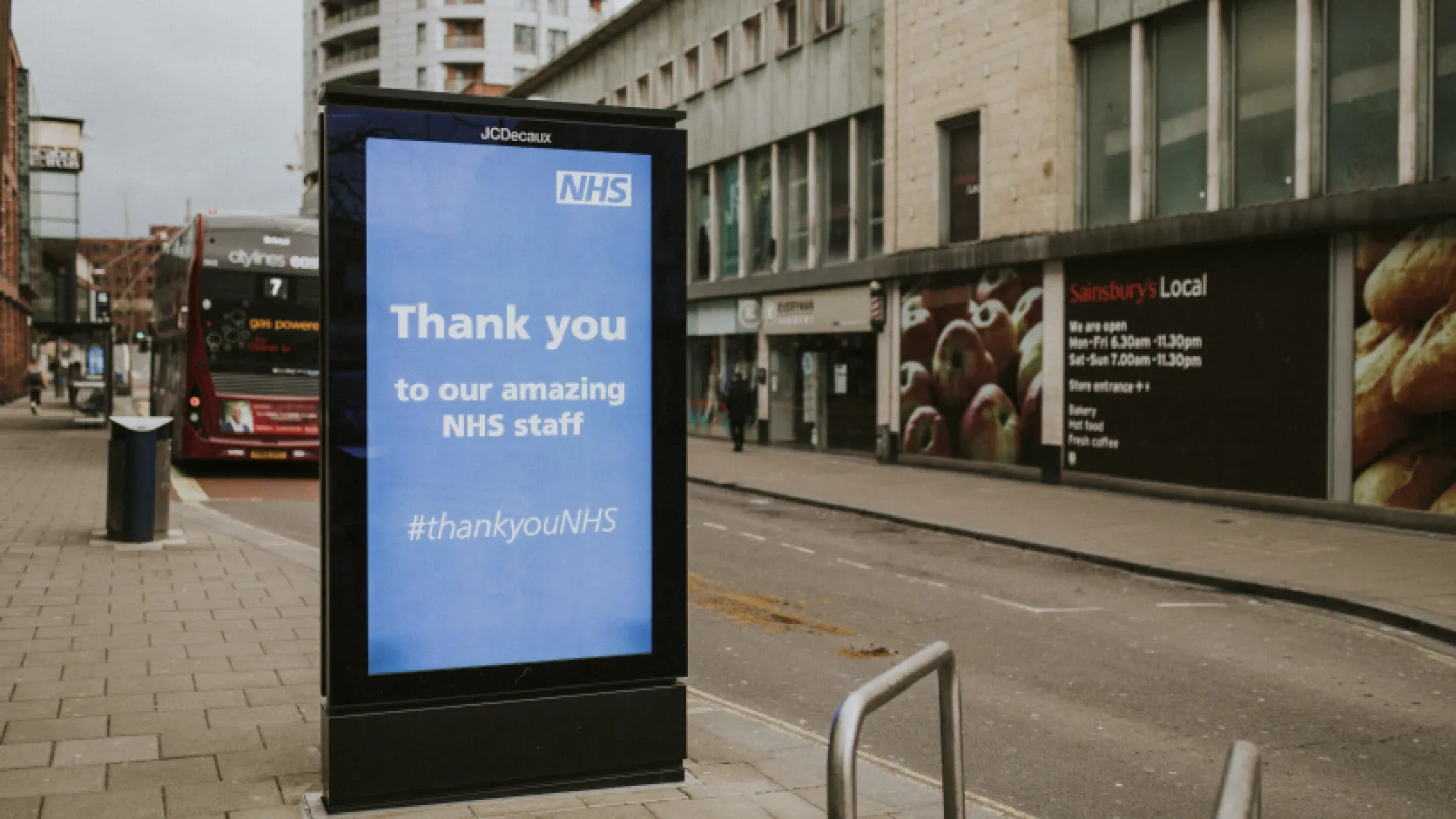
Despite the rapid rise of digital marketing, outdoor advertising continues to be one of the most effective channels for businesses looking to build brand visibility, strengthen local presence, and leave a lasting impression. But today’s outdoor advertising landscape is very different from what it once was. Traditional billboards now work alongside intelligent digital displays, real-time content updates, and data-driven campaign optimisation.
This evolution has given rise to Digital Out-of-Home (DOOH) advertising, a technology-enabled extension of traditional Out-of-Home (OOH) media that combines the broad reach of physical advertising with the agility of digital marketing.
Whether you’re a marketing manager, real estate developer, retail chain, healthcare brand, educational institution, automotive company, or enterprise business, understanding the difference between OOH and DOOH can help you make more informed media investment decisions.
This guide explores everything decision-makers need to know, from how OOH works and why it remains relevant to the advantages, costs, measurement capabilities, and future potential of DOOH advertising.
Out-of-Home (OOH) media refers to any form of advertising that reaches people while they are outside their homes. It includes traditional billboards, transit advertising, bus shelters, metro branding, airport displays, mall media, street furniture, wall wraps, and other public advertising formats.
Unlike digital advertisements that can be skipped, blocked, or scrolled past, OOH advertising becomes part of the physical environment. It naturally captures attention during daily commutes, shopping trips, business travel, and other everyday journeys.
Its ability to consistently reach diverse audiences makes OOH more than just an advertising medium, it remains a valuable long-term branding investment.
Digital Out-of-Home (DOOH) advertising enhances traditional outdoor media by replacing static print creatives with digital LED screens, video walls, smart displays, and network-connected billboards.
Unlike conventional billboards that display a single printed creative throughout the campaign, DOOH enables advertisers to update content instantly without replacing physical materials.
This flexibility allows brands to deliver more relevant messaging based on audience behaviour and timing.
For instance, a restaurant can promote breakfast offers in the morning, lunch specials during the afternoon, and dinner menus in the evening—all using the same digital screen.
Similarly, a real estate developer can showcase residential projects during weekends when site visits are more likely, while highlighting commercial properties during weekday business hours.
By adapting content to the right audience at the right time, DOOH helps improve both campaign relevance and overall marketing efficiency.
Both OOH and DOOH advertising help brands connect with audiences in high-traffic locations, but they differ significantly in how campaigns are managed and optimised.
Traditional OOH relies on printed billboards with static creatives that remain unchanged throughout the campaign. This makes it an effective option for businesses looking to build sustained brand awareness and maintain consistent visibility over a longer period.
DOOH, on the other hand, uses digital LED screens that allow advertisers to update creatives remotely, display videos and animations, schedule different messages throughout the day, and run multiple campaigns on a single screen. It also enables better audience targeting and provides richer campaign insights, making it an ideal choice for brands seeking greater flexibility and measurable outcomes.
If your objective is long-term brand presence, traditional OOH remains a dependable solution. If your campaigns demand dynamic content, faster execution, and data-driven optimisation, DOOH offers significantly greater flexibility and control.
The growing adoption of DOOH advertising is driven by its ability to combine creative flexibility with measurable business value.
Dynamic visuals, motion graphics, and video content naturally attract more attention than static advertisements, helping brands create stronger audience engagement.
Campaigns can be updated across multiple locations within minutes, allowing businesses to respond quickly to changing promotions, events, or market conditions.
DOOH allows advertisers to modify pricing, offers, promotions, or messaging instantly without incurring additional printing or installation costs.
Moving visuals and engaging creative formats make campaigns more memorable, improving brand recognition and recall.
DOOH works seamlessly alongside other marketing channels, including:
When combined strategically, these channels create multiple customer touchpoints throughout the buyer journey, strengthening overall campaign effectiveness.
Modern DOOH campaigns increasingly utilise audience insights, location intelligence, and smart scheduling to improve campaign performance and maximise return on investment.
Outdoor advertising doesn’t follow a fixed pricing model because campaign costs vary based on several factors. The final investment depends on your campaign objectives, target audience, location, and media format.
Some of the key factors that influence pricing include:
Instead of comparing advertising formats based solely on cost, businesses should consider the overall value they deliver, including reach, flexibility, campaign agility, and long-term brand impact.
A common misconception about outdoor advertising is that its impact cannot be measured. While traditional OOH relies more on estimated audience exposure, today’s measurement techniques provide marketers with far greater visibility into campaign performance.
DOOH takes measurement a step further by supporting scheduled content delivery, campaign-level reporting, and integration with broader marketing analytics. These insights help advertisers refine future campaigns and make more informed media investment decisions.
Choosing the right outdoor advertising partner is just as important as selecting the right media format. Beyond securing advertising space, the right partner helps businesses maximise visibility, optimise budgets, and place campaigns where they can create meaningful business impact.
A well-planned outdoor advertising strategy brings together location intelligence, audience behaviour, and compelling creative to deliver stronger brand recall and long-term marketing value.
Outdoor advertising has evolved well beyond traditional billboards. Today’s OOH and DOOH solutions enable businesses to combine large-scale visibility with data-driven planning, flexible content delivery, and measurable campaign performance. Whether you’re launching a new project, building regional brand awareness, increasing retail footfall, or supporting an omnichannel marketing strategy, the right outdoor advertising approach can play a significant role in achieving your marketing objectives.
At ITS Spotlight, we help businesses unlock the full potential of outdoor advertising through premium billboard placements, Digital Out-of-Home (DOOH) campaigns, and end-to-end media planning and execution. By combining strategic location selection, innovative advertising solutions, and measurable campaign outcomes, we help brands maximise visibility and create lasting impact in an increasingly competitive marketplace.
What is the difference between OOH and DOOH advertising?
OOH (Out-of-Home) advertising includes traditional outdoor media such as static billboards, transit advertising, and street furniture. DOOH (Digital Out-of-Home) advertising uses digital LED screens and smart displays, allowing businesses to update content in real time, schedule campaigns, and deliver dynamic advertising experiences.
Which industries benefit the most from OOH and DOOH advertising?
Industries including real estate, retail, healthcare, education, automotive, hospitality, banking, FMCG, entertainment, and government organisations use OOH and DOOH advertising to increase brand awareness, reach large audiences, and strengthen their presence in key markets.
Is DOOH advertising more expensive than traditional billboards?
DOOH campaigns may have higher media costs depending on the screen type and location. However, they often deliver greater value by offering dynamic content, instant creative updates, flexible scheduling, and the ability to run multiple campaigns without recurring printing and installation expenses.
How can businesses measure the success of outdoor advertising campaigns?
Businesses can evaluate campaign performance using metrics such as estimated impressions, audience reach, website traffic, QR code scans, store visits, lead generation, brand awareness studies, call tracking, and campaign lift across other marketing channels.
How should businesses choose the right outdoor advertising partner?
Businesses should look for a partner with a strong media network, premium advertising locations, strategic planning expertise, transparent pricing, creative support, reliable campaign execution, performance reporting, and proven experience delivering successful OOH and DOOH campaigns across a wide range of industries.